Webinars
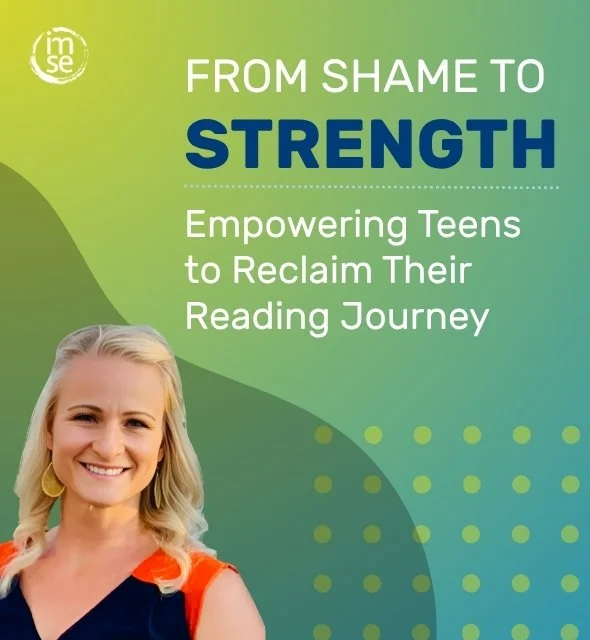
IMSE “From Shame to Strength: Empowering Teens to Reclaim Their Reading Journey”
Too often, adolescent readers carry not just unfinished skills, but years of shame, frustration and mistrust. In this inspiring and actionable webinar, Secondary Literacy Specialist Faith Howard will show you how to start the school year in a way that disarms resistance and builds trust. Learn practical, research-based strategies to create a safe classroom, address gaps without shame, and use the Science of Reading to boost confidence. Walk away with practical tools to connect, motivate, and empower even the most reluctant readers—proving that with the right approach, every student can reclaim their path to reading success.
The Reading League Summer Book Study Kickoff: “Reading Isn’t Optional”
The Reading League hosted the Chapter Network Summer Book Study Kickoff for "Reading Isn't Optional," welcoming over 3,000 educators and school leaders to discuss evidence-aligned reading instruction for adolescent learners. Melanie Hazelwood, Chapter Director, introduced the book study structure and emphasized the urgent need to address reading failure among older students, noting that too many students are still being left behind despite progress in awareness of the science of reading.
Two panelists, Faith Howard, a 6-12 literacy specialist from Wyoming, and Rhonda Nelson, a curriculum instruction and assessment coordinator, shared their successful implementation of literacy intervention programs, highlighting significant improvements in student outcomes including reduced below-basic reading scores from 30% to single digits through evidence-based approaches and proper scheduling. The panelists discussed key challenges such as identifying the right students, securing leadership buy-in, addressing teacher resistance, and implementing appropriate assessments like FastBridge and CBM for oral reading fluency. Dr. Louisa Moats and Jeannie Schopf, co-authors of the book, joined the discussion to emphasize the critical importance of multi-component language and literacy instruction, diagnosing specific skill gaps, and engaging students with purposeful reading of grade-level texts.